metaphysical & metaphorical musings : art, architecture, and arithmetic
Showing posts with label Fetish. Show all posts

Tuesday, February 22, 2011

Deformation & Fetish Objects

Deformation’s been on my mind all semester.  A big part of this chronic fixation is my puppy-love for Jerome McGann’s book radiant textuality: literature after the world wide web.  (It’s a spectacular book.  Really.)  Deformation is McGann’s instruction; he advocates precisely the sort of image manipulation we started our semester with, and shares his experience messing around with Dante Gabriel Rossetti’s art that lead to new insights on his own part.  His dictum is that no text (or image, I suppose) is ever self identical—so why not bring the image (or text, I suppose) into its ecstasy by helping it along?  McGann uses the term deformation to foreground the function of criticism and interpretation.  Transformation works equally well, and sheds any negative connotations that deformation might carry.

In a response to one of Wendy’s emails earlier this semester, I wrote a little about the deformation of the accident as an event into the static, flattened image of the accident, the sign; and about the deformation into pixilation (which allows us to make all those fun transformations).  This is implicit in McGann, particularly his discussion of how a high-powerd scanner never produced the same facsimile twice.  ‘Pixelation’ is also implicit in Newton’s calculus, which divides a curve into numerous discreet segments that resemble the original curve, and the same with Cartesian arithmetic, which transforms an algebraic statement into a geometric form mapped onto a grid—my figure for the Pruitt-Igoe disaster.  The design of the buildings was heavily influenced by Le Corbusier’s philosophy of architecture (thanks, Todd!) which relies heavily on formal properties and geometric space.  Le Corbusier is a pseudonym, a transformation of the identity, which corresponds with Le Corbusier’s Modular scale, a transformation of the physical body—the human form—into a mathematical exemplar, a harmony of ratios.  Even the name, Le Corbusier, suggests the force of bending and deforming.

I’ve looked briefly at the fetish-object, the relation between dominoes and punched cards.  Part of that examination was the difficulty of deciding just how far back to trace in pursuit of the object.  Both of these are, of course, cases of transformation/deformation, but the dominoes seem more interesting to me as a transformation of aleatory play.  Dominoes were, allegedly, derived from dice; in a physical sense, the dice are flattened out in the transformation to dominoes, but the luck of the throw is transformed into the luck of the draw, which seems like a sort of flattening out (maybe Caillois will be able to help me with this).  Dominoes also have the added feature of physical extension, of creating an emergent structure, form from number just as Le Corbusier’s architectural philosophy extols.  The difference between the domino-structure and the Pruitt-Igoe grid is the difference between liberal-aleatory and conservative-utilitarian deployments of space.

What’s the difference between Pruitt-Igoe and a stack of dominoes?  The stack of dominoes has a better chance of staying upright.

Sunday, February 20, 2011

The Ecstasy of the Fetish?

Punched cards and dominoes; presence and absence.
Some Dutch sailors playing dominoes.  Each domino represents the outcomes of throwing two dice.
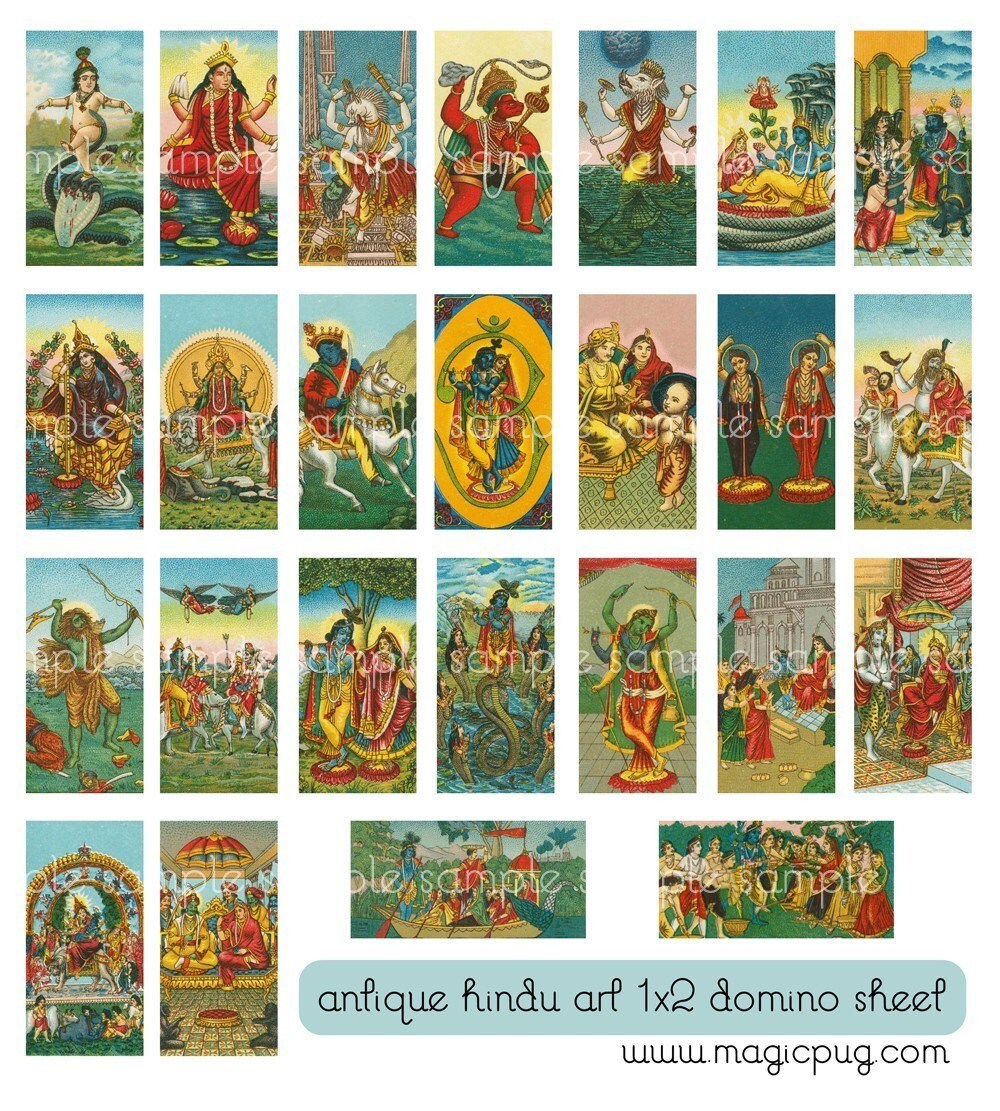
A set of Hindu dominoes.  Eastern culture adapted thrown dice into static tiles.
The work of Indian scholar Pingala is the first known description of binary, as a description of metre.  Leibniz discovered binary in the West more than a few centuries later, not too long before dominoes made their way to Europe.

Blake, The Marriage of Heaven and Hell.

Punched Cards

In 1811, Lord Byron went before the House of Lords in defense of the ‘frame breakers’, textile workers who lost their jobs to mechanical looms and retaliated by smashing the offending machines.  A decade earlier, these Jacquard looms were developed from a more primitive design.  A crucial improvement in the Jacquard loom’s design was its method of input: the punched card.  This was the first machine to operate on binary, a language of presence and absence, like the modern computer.

Augusta Ada King, Countess Lovelace, is credited as the first computer programmer, working with Charles Babbage’s designs for his analytical engine capable of mechanically performing complex calculations—a major leap forward in efficiency and speed toward our modern electronic computers.  Of course, Ada wasn’t using keyboard—she was using punched cards.

Punch(ed)line: Augusta Ada King was born Augusta Ada Byron, and we remember her precisely because of her relationship with a technology that her father politically opposed.

‘the Analytical Engine weaves algebraic patterns just as the Jacquard-loom weaves flowers and leaves’ – Lady Lovelace, qtd. in Hofstadter, Godel, Escher, Bach

John von Neumann revolutionized computing after World War II.  Impressed by the complexity and slowness of calculations conducted by hand and counting machine at Los Alamos.  Also during the war, he was able to study the ENIAC computer.  Based on these, von Neumann proposed a digital, binary, stored-program computer.  His wife, Klara, became one of the first programmers of this new type of computer—a sort of female-line descendent of Ada.

“I like the lucidity of mathematical world and the mathematical feeling that there is only one right answer to a problem.” – Klara von Neumann, qtd. in Poundstone, Prisoner’s Dilemma


Punch(ed)line: According to Poundstone, von Neumann's brother speculated that John was inspired to use punched cards in his computer by childhood conversations about the Jacquard loom factory that their father's bank financed, rather than descending directly from the design of Babbage's early mechanical computer.

Saturday, February 19, 2011

Corbusier & Corbusier

"Le Corbusier 
adopted his pseudonym in the 1920s, deriving it in part from the name of a distant ancestor, Lecorbésier. But in the absence of a first name, it suggests a physical force as much as a human being. It brings to mind the verb courber, to bend, and, of course, Le Corbusier was a great bender of townscapes to his own will. It also brings to mind le corbeau, the crow or raven, not a conventionally beautiful bird in plumage or song, but one that is simple and unornamental in both and therefore, metaphorically speaking, honest and undeceiving, as Le Corbusier claimed his architecture to be. In French, le corbeau has a further meaning: that of a bird of ill omen—and perhaps that is the architect’s little joke upon the world."


Da Vinci's Vitruvian Man
Le Corbusier's design was informed by his Modulor, a scale of proportions based on the ratios of the human body, a continuation of Da Vinci's project in the Vitruvian Man.  It relies on the golden ratio, another irrational mathematical constant like pi, and the Fibonacci sequence, an exercise in vertigo which produces the golden spiral whose growth is related to the golden ratio.  Da Vinci and found this ratio inherent to the human form, and it can be seen in other natural phenomena.  Le Corbusier's ambition was to use this ratio to create architecture and design suited precisely to human proportions, possible through the mathematical order of the universe.
Le Corbusier's Modular Man

The first Modulor Man was based on the height of the average Frenchman, but was later revised to accord with the standard height of attractive men in English detective novels.  At least in the second case the base was a professedly fictional standard.  The very name, "Modular", evokes "modular", or interchangeable, the very image of Pruitt-Igoe, the design of which was inspired by Le Corbusier's architectural principles.  He considered the Modulor scale to be one capable of uniting the Metric and Imperial scales, creating universal equivalency.


One of Le Corbusier's early projects was the Domino House.  It is a very simple, practical design, but also one in which interior layout is customizable within the overall form.  The name evokes the image of dominoes stacked and arranged to build a small structure, but also recalls the variety of ways dominoes can be combined and recombined within the overall structure or rules of the game--the very essence of modularity.

Perhaps we've found the fetish-object?